
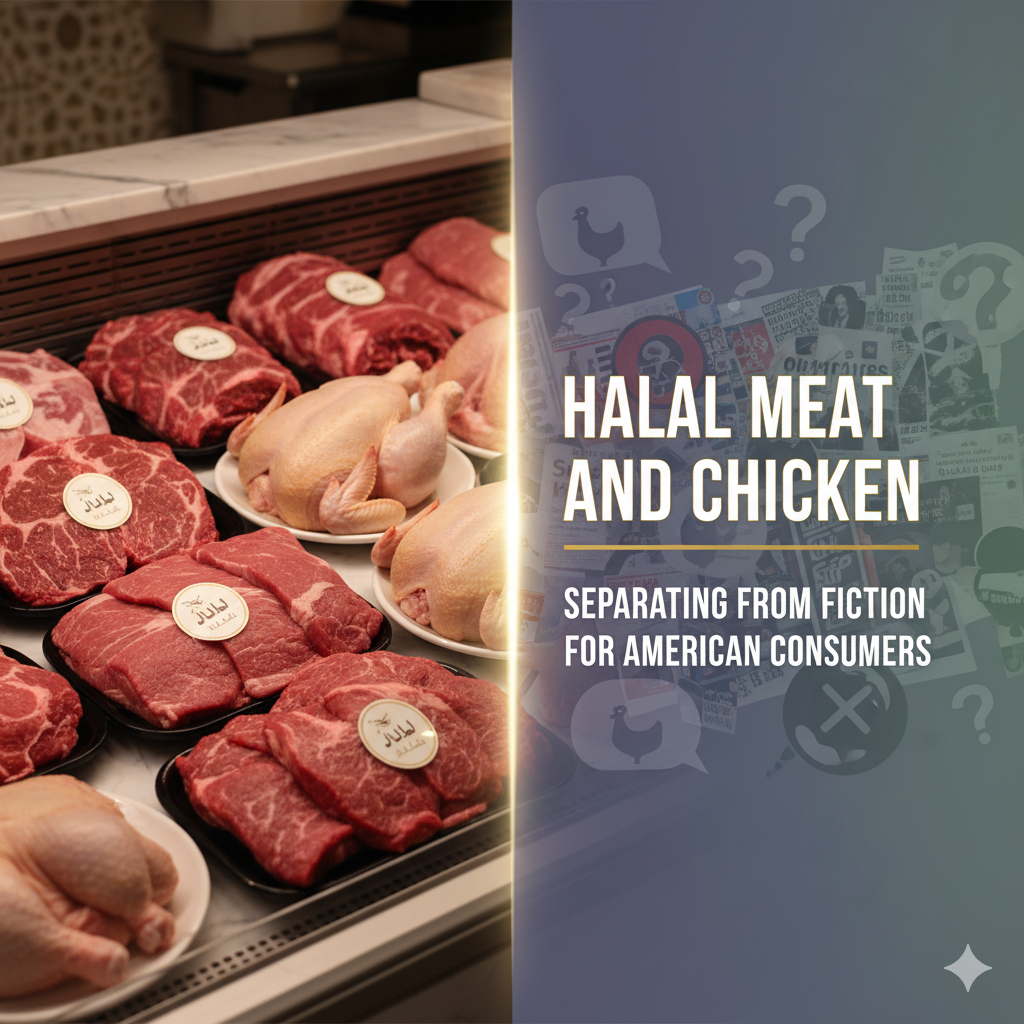
The American food landscape has transformed dramatically over the past two decades. Walk into any major supermarket today, and you’ll likely find a halal meat section alongside organic, grass-fed, and free-range options. Yet despite its growing presence, halal meat remains shrouded in misconceptions and misinformation. Whether you’re a Muslim consumer seeking authentic halal products or simply curious about this increasingly popular category, understanding the facts behind halal certification is essential.
What Actually Makes Meat Halal?
At its core, halal is an Arabic term meaning “permissible” under Islamic law. For meat to be halal, it must meet specific religious requirements that govern both the type of animal and the method of slaughter.
The process involves several key elements: the animal must be healthy at the time of slaughter, the person performing the slaughter must be Muslim and invoke God’s name, and the method must ensure swift, humane treatment that allows complete blood drainage. Contrary to popular belief, halal slaughter prioritizes animal welfare—the blade used must be extremely sharp, and the cut must be made swiftly to minimize suffering.
What many Americans don’t realize is that halal standards also prohibit certain practices. Animals cannot be stunned to death, cannot witness other animals being slaughtered, and must be treated with respect throughout their lives. These requirements align closely with many consumers’ growing concerns about ethical animal treatment.
The Certification Maze: Not All Halal Labels Are Equal
Here’s where things get complicated for American consumers: unlike USDA organic certification, halal certification isn’t federally regulated. This means multiple organizations offer the best halal certification services in the USA, and their standards can vary significantly.
Reputable halal certification bodies conduct rigorous inspections of meat processing facilities, verify slaughter methods, audit supply chains, and provide ongoing monitoring. They maintain transparent standards, employ qualified Islamic scholars, and hold facilities accountable through regular unannounced visits.
For businesses involved in halal meat and chicken production, choosing the right certification partner is critical. A US-based halal certification agency understands American food safety regulations and can help companies navigate both religious requirements and USDA compliance. This dual expertise is invaluable for meat export operations, where products must meet halal standards for international markets while satisfying domestic food safety laws.
Common Myths Debunked
Myth 1: Halal meat is less hygienic than conventional meat.
Fact: Halal slaughter requires complete blood drainage, which actually reduces bacterial growth potential. Additionally, certified halal facilities must meet all standard USDA food safety requirements—they’re adding religious requirements on top of existing health standards, not replacing them.
Myth 2: Halal certification is just a religious tax.
Fact: Certification services cover real costs including facility inspections, auditor training, supply chain verification, and ongoing compliance monitoring. Reputable certifiers operate transparently, and their fees are comparable to other specialty certifications like organic or kosher.
Myth 3: Halal and organic are mutually exclusive.
Fact: Many producers now offer meat that is both halal-certified and organic. These products appeal to consumers seeking both religious compliance and sustainable, ethical farming practices.
Why American Consumers Are Choosing Halal
The halal meat market in the United States has exploded, growing from a niche offering to a multi-billion dollar industry. While Muslim consumers remain the primary market, non-Muslim Americans are increasingly choosing halal products for various reasons.
Some consumers appreciate the animal welfare standards inherent in halal requirements. Others value the traceability and transparency that comes with certification—when you buy certified halal meat, you generally know more about how that animal was raised and processed than with conventional products.
The emphasis on cleanliness and blood drainage also appeals to health-conscious consumers, while the prohibition on certain additives and processing methods aligns with clean eating trends.
What to Look for When Buying Halal Meat
Smart consumers should examine several factors when purchasing halal products. Look for clear certification logos from recognized organizations—legitimate certifiers display their credentials prominently. Don’t hesitate to ask butchers or store managers about their halal certification source and practices.
For chicken specifically, inquire whether birds are hand-slaughtered, as this is considered more authentic than mechanical processing by many Islamic scholars. Check that the certification covers the entire supply chain, not just the final processing step.
Many consumers find it helpful to research the certifying organization online. Reputable halal certification services maintain websites with detailed information about their standards, inspection processes, and certified facilities.
The Business Perspective: Certification for Meat Producers
For meat and chicken businesses, halal certification opens significant market opportunities. The global halal food market exceeds $2 trillion, with substantial domestic demand in the United States alone.
Companies seeking halal certification for meat export must understand that different countries may require specific certifying bodies. A US-based halal certification agency with international recognition can streamline access to multiple markets. The best services offer comprehensive support including staff training, facility modifications guidance, and documentation for international trade.
The certification process typically involves an initial facility audit, staff training, ongoing monitoring, and periodic recertification. While this requires investment, certified producers often report that halal certification enhances their quality control systems overall, benefiting all their product lines.
Moving Forward: Transparency and Trust
As the halal market matures in America, consumers should expect increasing transparency and standardization. The industry benefits when certification bodies operate openly, educate consumers honestly, and maintain rigorous standards.
For those new to halal products, start by exploring offerings at your local supermarket or specialty butcher. Ask questions, read labels carefully, and don’t be afraid to contact certifying organizations directly if you have concerns.
Whether motivated by faith, ethics, health, or curiosity, American consumers deserve accurate information about halal meat and chicken. By separating fact from fiction, we can make informed choices that align with our values—and perhaps discover that this ancient tradition has much to offer our modern food system.
The key is approaching halal certification with the same critical eye we apply to any food label: understand what it means, know who stands behind it, and verify that the standards match your expectations.
